On this page
- 1. From your vantage point as COO, what is fundamentally changing about how modern organisations manage information?
- 2. Many organisations are investing in AI, automation, and new workplace tools but performance still feels limited. What’s getting in the way?
- 4. What does it mean for an organisation’s data to be “ready” for AI?
- 5. Technology investments are increasing, but measurable business impact remains elusive. Why?
- 6. What must be true for emerging technologies to be trusted and useful in real business environments?
- 7. How should business and IT leaders rethink document management if they want to improve performance and prepare for the future?
- 8. What changes in practice when an organisation takes a more connected approach to managing information?
- 9. When leaders evaluate solutions to improve operational efficiency, what criteria matter most?
- 10. As you look ahead, what mindset shift will matter most for leaders who want to stay competitive?
A Conversation with Sanjiv Kumar Jha, COO of TeamSync
New AI tools keep arriving faster than most organisations can size them. Leaders have run pilots, trialled platforms and backed ideas that looked promising. But few of those efforts have made it into daily work and the gap between what gets tested and what actually changes a team’s week is growing.
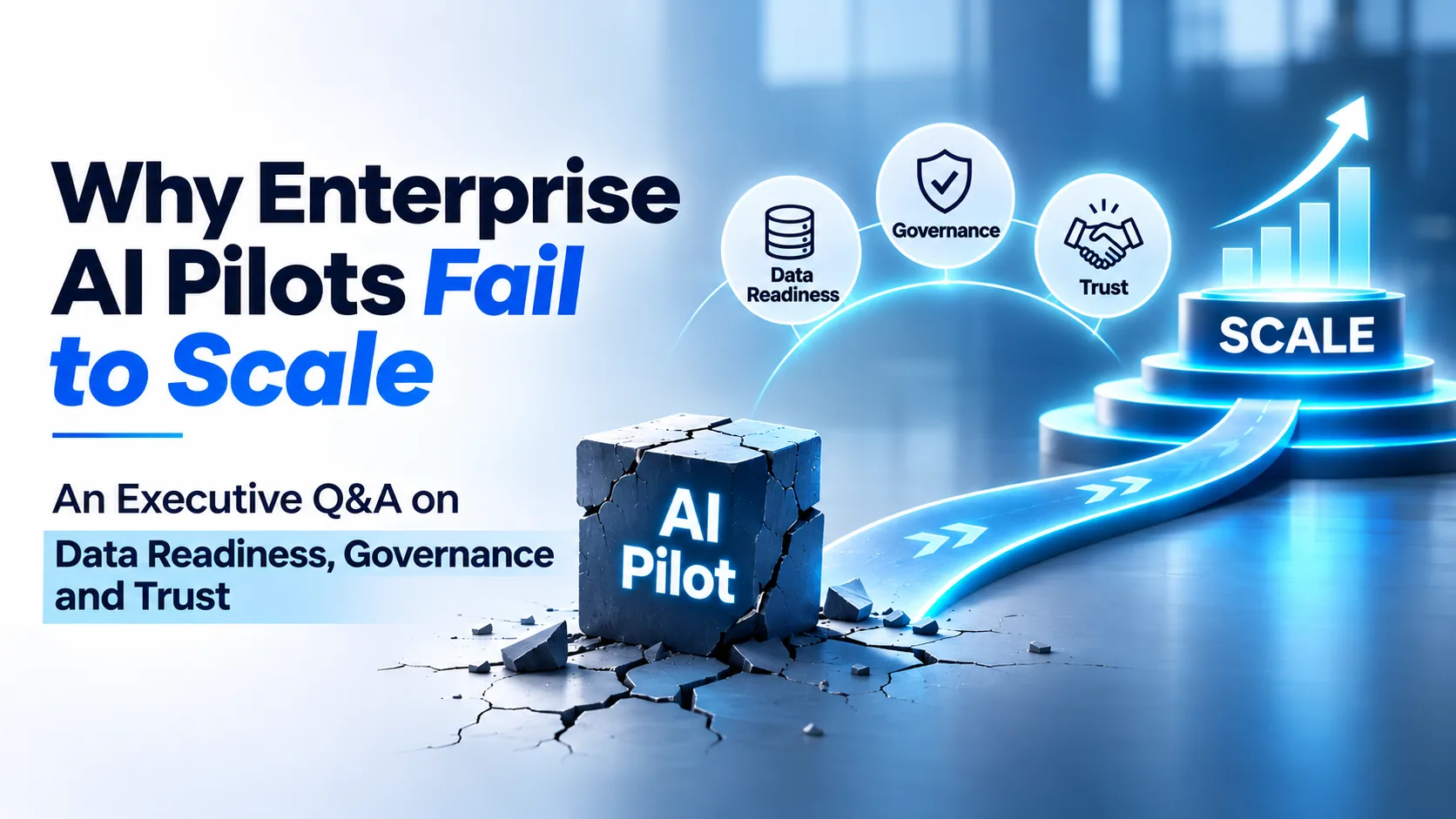
In this conversation with Sanjiv Kumar Jha, COO of TeamSync, he shares his perspective on why so many AI pilots stop working before they scale, why the readiness of business data and governance matters, and how leaders can build a foundation that allows AI to deliver reliable results across organisations.
1. From your vantage point as COO, what is fundamentally changing about how modern organisations manage information?
What’s changing most is that work is no longer confined to individual teams, departments or systems. A single business process involves multiple teams and external partners. They also need approvals for large volumes of data across different platforms. Work moves constantly between people and systems and follows a systematic path.
This has changed what organisations need and how they handle the information. Having documents stored somewhere is not enough. Teams need a quick access to up-to-date information in the right file. Meanwhile, executives must maintain visibility, control and compliance without slowing the business.
The major shift is managing information and making it useful across the organisation. Businesses that connect their information, people and processes will be better positioned to make timely decisions.
2. Many organisations are investing in AI, automation, and new workplace tools but performance still feels limited. What’s getting in the way?
Technology itself does not eliminate the complexity of work. It makes existing problems more visible and organisations need to introduce new platforms to automate processes. But if the information behind those processes is outdated or hard to find, then the underlying challenges still cause the issue. It is time taking to search files in multiple systems for documents and compare different versions. This seems like a small inefficiency, but across large organisations, they collect and affects productivity.
3. Many AI pilots look strong in the first few weeks, then stop. What usually goes wrong?
A pilot runs in a protected space and the team picks a small set of clean files and one clear goal. Trouble starts when the same tool needs to live in many places, in different formats. But the problem is not the tool; it is the information in fragmented files. If the teams do not depend on the answers and the pilot never becomes part of daily work.
4. What does it mean for an organisation’s data to be “ready” for AI?
Pilots operate under controlled conditions and they use a limited set of reviewed documents. Under those conditions, the results appear convincing. Some files are outdated and some lack proper context even the people working with them are unsure which version to trust.
Organisations need to use accurate basic information, and documents should be organised. These sound simple but they make an important difference to how confidently information can be stored.
5. Technology investments are increasing, but measurable business impact remains elusive. Why?
The implementation of technology is sometimes mistaken for business progress. Organisations may successfully introduce new platforms but that does not guarantee better results.
Leaders need to measure what has actually improved. The focus should be on results not the number of tools deployed.
6. What must be true for emerging technologies to be trusted and useful in real business environments?
We should know how the system arrives at conclusions, and what its limitations are. Particularly where decisions have implications in terms of money, law or operations.
Transparency is important. We should always know how to trace outcomes, identify problems, and find out who was making the decisions.
7. How should business and IT leaders rethink document management if they want to improve performance and prepare for the future?
Document management should be considered an integral part of core business.
This will ensure that leaders consider all aspects of managing documents from creation, through collaboration, to approval, retention and destruction. This will create a more consistent process across departments and reduce the need to manually manage documents.
8. What changes in practice when an organisation takes a more connected approach to managing information?
The main benefit of this feature is that employees have more clarity around their tasks. Employees no longer need to guess the relationship between the document and the project/customer/contract/decision they are working on.
This helps managers to identify delays, track progress and know what areas they need to focus.
9. When leaders evaluate solutions to improve operational efficiency, what criteria matter most?
Look beyond the features and consider how flexible a solution can be in meeting your organization's needs.
Consider how flexible the solution is, how easily it can be integrated, how secure it is, how scalable it is and how easy it is to use. Ensure leaders have a good understanding of how much control they will have over their systems and data.
Ensure that the solution will solve a business problem without causing unnecessary complexity.
10. As you look ahead, what mindset shift will matter most for leaders who want to stay competitive?
You need to be much more strategic with your technology decisions and not chase trends.
It should be about where you want your business to improve and investing in your priorities for the long term. If you’re very clear on your purpose, you’ll be able to adapt better to changes in expectations and technologies.